Learn How to Use a Capo on Acoustic Guitar – Playing in Different keys With Guitar Capo
[contentwall] 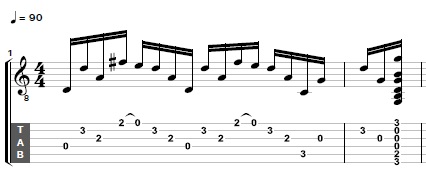 [/contentwall][ninja-popup ID=715]
[/contentwall][ninja-popup ID=715]
 [/contentwall][ninja-popup ID=715]
Hey, this is Matias Rengel with Guitar Control, we’ll be learning this really cool new soul groove.
[contentwall] [/contentwall]
Click on the Tabs button to follow chords and tabs.
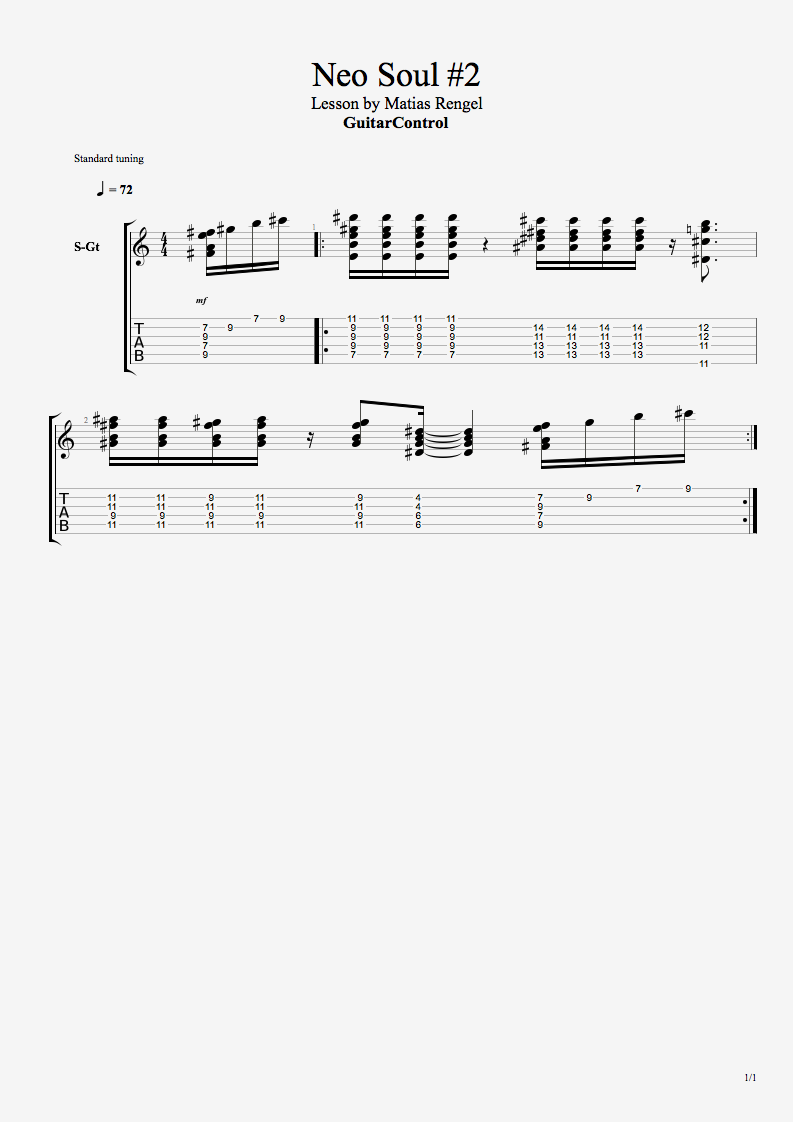
I’m just playing some sort of an F-sharp minor, so what I’m doing for this chord I’m placing my index finger on the 7th fret all across the string and then I got my middle finger on the 9th fret of the 5th string in ring finger on the 9th fret of the 3rd string pinky finger is on the 9th fret of a second but sometimes I’ll remove it of course and I put it in other strings I play with it and then from there I go into this one, basically an E major 7 it’s this chord I mean you probably know this chord and you know the A major if you move it up.
So what I do is I play these three notes with my ring and then put the fret for that, I have my ring finger on the 7th fret of the 5th. The riff, my index finger design for the 5th ring finger on this 9th fret of the 4th, 3rd, 2nd and the pinky is on the 11th for the 1st then from there I’m going to this one which is an inversion over an E flat minor 7 or a D sharp minor 7, how you want to call it so for this one basically I have my middle finger on the 13th fret of the 5th string my ring finger on the 13 fret of the 4th index finger on the 11th fret of the 9th fret of the 3rd string and pinky finger on the 14th of the 2nd.
From there we go to this one it’s basically an E flat alter so what I do is I have my index finger on the 11th fret of the 6th string middle finger and 11th for the 4th, I’m not playing the 5th so I’m muting with the index finger and then I have my ring finger on the 12th fret of the 3rd and pinky finger on the 12th fret of the second take this out for this it’s the same as the first one but two frets up so it’s the same position but we just have the middle on the 11th fret this one is on the 9 the ring fingers on the 11 on the 3rd and the pinkie on the and then finish it up with this so for this is the G sharp minor so for that the way it smoother I just do it like this of course but you could totally stretch.
I’m doing it because it’s easier to make fingers and do it like this if it’s too much of a stretch so for what I’m doing got the 6th fret of the 5th and 4th string and then with the index I’m playing the 4th fret, now let’s get more into the specifics. The chords that I’m playing now for the first chord, I’ll down the pinky on the nine of the first and then I go into this one I play it four times and from there what I like to do is put my pinky in there and just do one are you want to with the pinky and then three without a pinky for with the pinky fine with the pinky right so the melody that’s happening here 1, 2, 3, 4, and then I come down here and I slide it down.
Now it’s important that you listen to and another thing that I like to do here is I like to tell a different inversion in between the E major 7 and the next chords I like to do the same here before this one so for that 13th fret of the 4th and 3rd, 12th fret of the 2nd and 14th fret of the 1st. Now you can play this with a little bit more beautiful if you want now it really depends I mean you should definitely try to play it slow at first because it’s really hard.
I hope you’ve enjoyed this lesson as usual there’s the link in the description so make sure you click or tap on it to download the top. There are a lot of videos, different styles different teacher’s different levels so make sure you subscribe on our You Tube Channel and we’ll see you in our next video lessons, thanks for watching.
[ninja-popup ID=715]
Hey, how’s it going this is Shawn Daniel with Guitar Control, today we’re learning an all-time Classic, one of the most iconic songs in the history of rock music and we’re going to do an easy acoustic representation of it, that you can play on solo while keeping some of the spirit of the original recording. The song is called “I can’t get no satisfaction” by the Rolling Stones.
[contentwall] [/contentwall]
[ninja-popup ID=715]
Click on the Tabs buton to follow the chords and tabs.
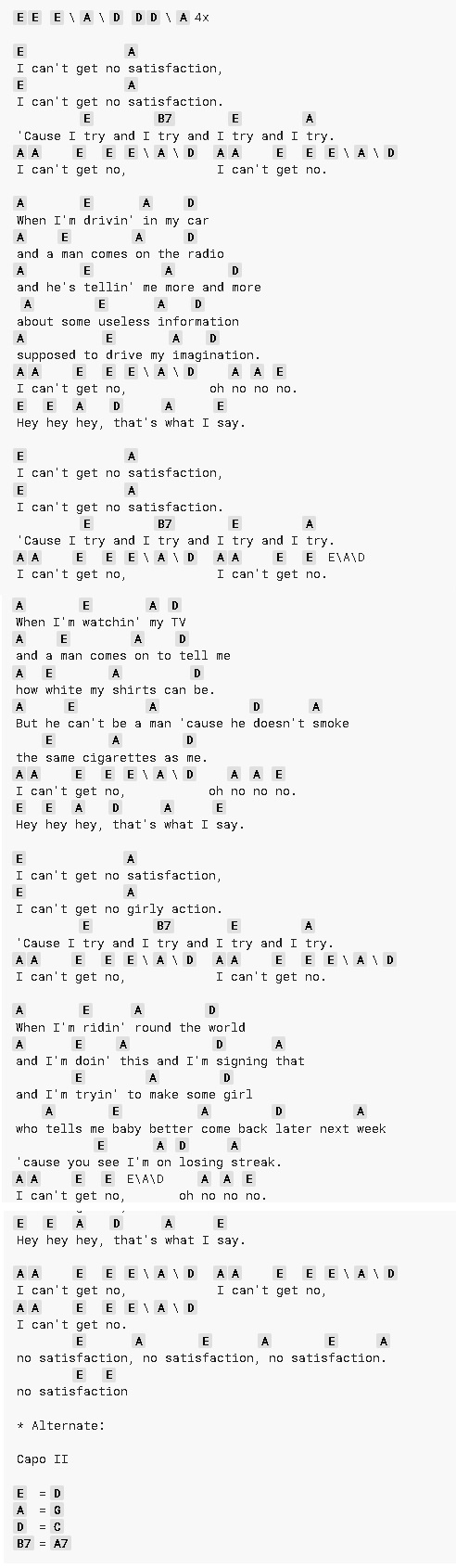
It’s all in the A-string where it’s 2, 2, 2, 4, 5, 5, 5, and 4, essentially you can play a couple different ways, but that’s most of it. Now we turn that into a chord progression. This is kind of a version that you can do, it’s only 3 chords super easy via E, A, B7, and back to E, then we’re going to jump back. First start with an E major chord; we’re essentially in the key of E. So it’s open E, little finger to a ring finger to D pointer finger 1G.
Now we’re going back and forth between E and A, for most of the song you want to go from this to this and back. So I’m playing this A major chord which is the next chord progression like this open A, 2D, 2G, 2B, open E, with my middle ring and pinky because it’s really easy to get back and forth between that E.
Let’s do a very simple strumming pattern without adding any kind of dynamics just to down, down, down, up, down, up, 1, 2, 3, and 4, and we just do that on E down, down, down, down, up, down, down, down, up, down, all right and whatever pace you want to do you use lower and move it to A and because we’re doing this version of an A and not this version of an A all you have to do is roll your middle finger and your ring finger back and forth, honestly even if you do it like E minor.
Essentially we just have a couple times around each of these 2, 3, 4, and the 2nd bar to A and the 2nd bar to A, and then back to E, back to A. For the next part we’re going to add new chord we have one time on E, one time on b7, back to E, back to A, so that last part, very bluesy were going from one bar down, down, down, up, down, up, 1, 2 3,and 4, and 5 to a b7.
This chord right here you’ll see it as a B on chord charts but in bluesy type songs and all the stone songs are pretty bluesy are b7, it’s going to be much easier way to use, that she kind of sounds more correct to. So b7 middle finger to A-string pointer finger, one on the B-string ring finger, to out the G-string (optionally) get your pinky on the high E-string if you want, not necessary but again it’s up to you.
So we’re going from E to b7, look how easy that transition is? All you have to do is, if you’re on an E major position your pointer finger you can stay it there and we just swap your ring finger and your pointer finger back and forth and then you can add your pinky go for it. Just really work this out, just like you want that to be as easy going back and forth.
So we got that E to b7, back to E, then down to A, then to the riff, but here’s the problem if you’re doing just an acoustic version it will sounds kind of puny almost like too thin, so what we want to do is we add that riff into chord form. This is where I first learned about all these Classic bands like the Stones and Zeppelin and stuff like everyone would refer them as “Blues Bands” and to me before I really knew this much, about music. I always thought about “Blues Being”, I think I had this misconception that it was just kind of boring music back in the day but then and it didn’t sound anything like the Stones, that’s not really a blues band but once we see the riff inside of an E major chord it makes a lot more sense. So we’re going to do add the low E string to the riff and then once you do that it takes that riff which sounds like a rock riff and then it’s such like okay well that’s where the Blues of it is now right there something super bluesy that doesn’t really sound like the stones. Now instead of just playing the riff like I said 2 2 2 4 5 5 4 we’re heading a low E-string 2 to get open E and 2A the same time.
You can even use different fingers, I promote that you be able to stretch like that because this is a good practice but sometimes it’ll sound better if you go on your finger, and then pointer, pointer middle, that’s something you could. Another thing you can do is to dress the song up a little bit more or even makes that thicker (optional). What I mean by that, let’s take that E chord and I’m just taking the open E, A-string and E-string, going to open to 2, so whenever I have the two in IRF I play it like I never have before 2, 2, 2, 4, 5, then I move this, it sounds fuller. So when you have the riff, a cool acoustic arrangement like one of the stuff we do is like to 2, 2, 4, and 5. Everybody knows, that’s a good way to introduce the song and then you get into the song and goes through the chords. And back to the verse, for me that’s a more cohesive super easy acoustic guitar version of the song.
It’s all about whatever you want to add the kind of melody to it, another way that might be tempted to do is a power chords. You have a single note and you want to beef it up, I think the initial thought is to turn it into a power chord. You have this B note, I want to add its 5th, so its 2A and 4D to make a power chord to beef it up that way go for it. I personally think that when you do that it makes it sound more like a B minor chord when really as we’ve shown we have the key in there it’s really a bluesy extension of an E chord.
Adding the power cord makes seem like a B minor which again I don’t really think is the core of the song. One thing you can do is add octaves, sometimes that sounds pretty good that is pointer finger on melody the whole way 2, 4, 5, and then your pinky, your ring finger is going to grab the two strings down two frets down and then get that open E in there. again a lot of voice you can do this but the point is Classic song just because it is more of like a rock song it has the whole band kind of Ivan there’s no reason that you can’t turn it into a pretty cool acoustically arranged song.
I hope you enjoyed it again make sure you click that link below to get the chords and if you have any questions hit us up in the comment section and make sure to subscribe on our You Tube Channel and we’ll see you in our next video lessons, thanks for watching.
– Click here to get Sean Daniel’s Secrets of Hendrix: DECODED – GO!!
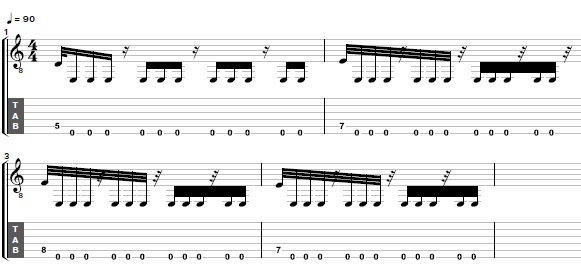
Ready to get your metal on? Check out this Gallop Picking Guitar Technique – Killer Guitar Lesson on Metal Riffs from Guitar Control instructor Robert Baker. With the step-by-step video instruction and the free included tabs (just click the link) you will be rockin’ this must-know technique tonight!
[contentwall] [/contentwall][ninja-popup ID=715]
How’s it going? My name is Robert and thank you for tuning in today to GuitarControl.com and today I’m talking about the wonderful metal technique known as the gallop. So if you’ve listened to metal music at all you know what this is all about. I have a kind of a scaled-down version of the gallop, it’s not like a real intense riff or anything, but if you haven’t done this technique this is a great place to start. Now there are tabs for this lesson down below in the description.
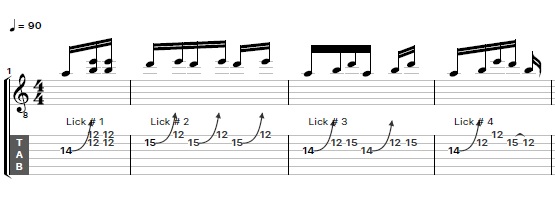
Now the riff is pretty simple and before we really get into what’s happening there let’s just go over what a gallop even is. So a gallop is basically 3 notes; 1 2 3. So the first thing you have to do is… so it’s very similar if you were just to do like straight… the issue there is a space, like a bunch of fours, that’s 1 2 3 4 1 2 3, you know like that. Now a gallop is 1 2 3 and there is no 4, the 4 is silent is a good way to look at it, we’re removing that note. This is a big reason why I’m always saying a lot of times it’s all about the notes you’re not playing, listen how much more groove and kind of rhythm this has… so there’s a big difference there. So what we’re doing here is first you want to get that gallop done as palm muting, it’s very heavy palm muting, definitely not doing it open, that sounds like a surf song. So what we want to do here is you’re gonna play five on the A string and do a gallop four times. So now the speed I wouldn’t worry about that you right now, we’re gonna focus on getting the rhythm of it down. So were gonna go up to seven on the A… so one more time slow and this time I’m gonna do it with a power chord. So we’re gonna play five on the A and seven… There’s a little trick that’s happening here since we are playing a single note. So gallop number four is actually only two notes to accommodate for that extra note here; so it’s one two three, one two three, one two three one two, and gradually work on speeding up.
Well thank you so much for watching Easy Gallop Picking Technique for Metal Riffs . I hope you enjoyed it. The gallop is a great technique if you’re trying to get into metal music. So aside from that I hope you have a great day and get those tabs and I’ll see you next time.
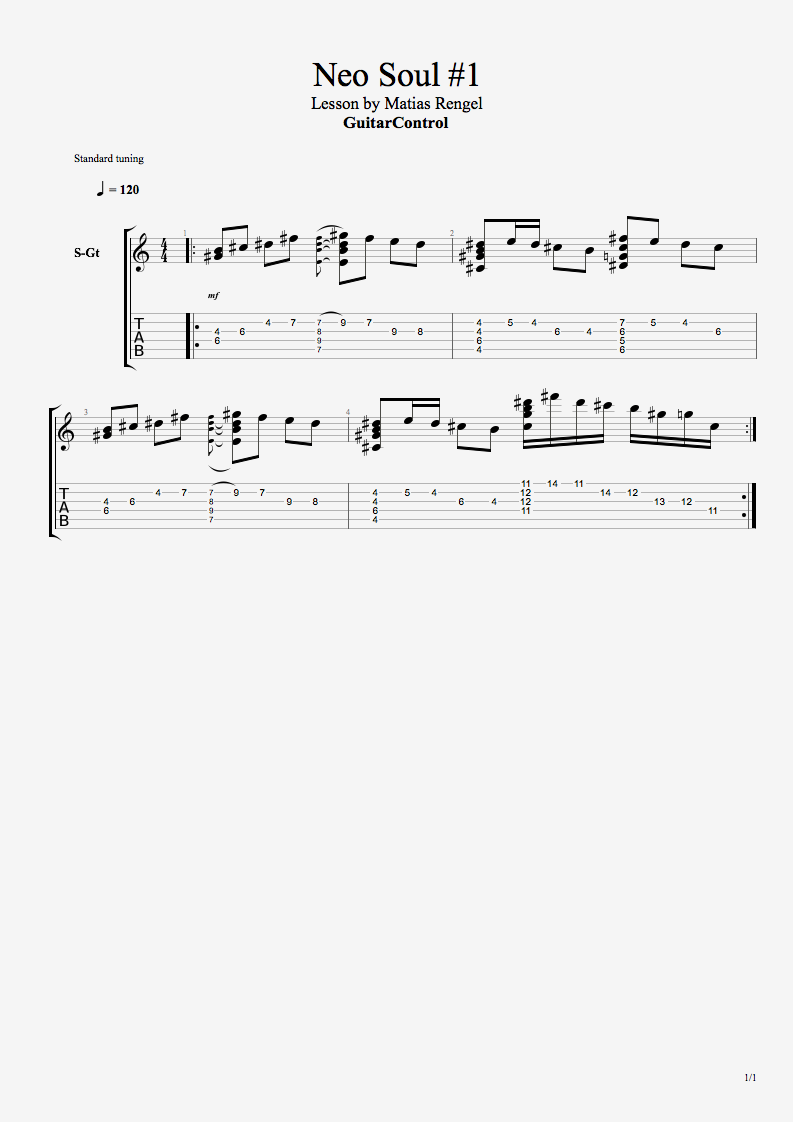
Check out this Free Awesome Neo Soul Guitar Chord Progression lesson from Guitar Control. Be sure to get the free tabs to go along with this killer lesson.
The first thing I would like to do is to play it at a slower speed for you to understand it better. This progression consists of two parts; we have the Chords and Little League sub pages in between. What I would like you to do is focus on the actual progression playing and specifics.
The first chord that I will be playing is in the G minor, not playing the entire card, just playing some part of the core. Put the index finger on the fourth fret all along for frame and have the 6th fret on the 5th and 4th string, then from there go to an E major 7, having my index on the 7th fret ring finger, on the 9th fret of the fourth wheel finger, on the 8th fret of the 3rd, and pinky finger on the 9th fret of a 2nd, then C sharp minor 7, (pay attention to all the shapes), that I am going to show you because we are going to go deep into it. The index finger again on the 4th fret and then the ring finger on the 6th fret of the 4th and the middle finger on the 5th fret of the 2nd.
Now here we got the Jimi Hendrix chord, for that we have an E, this is an E flat 7 sharp 9. My middle finger on the 6th fret of the 5th string, then the ring index finger on the 5th fret of the 4th string, a ring finger on the 6th fret of the 3rd string, and pinky finger on the 7th fret of the nd string. From there, we repeat that run. Index finger on the 11th fret of the third, second, first, and middle finger, on the 12th fret of the third ring finger, and on the 12th fret on the 2nd, I put my pinky finger on the 14th fret, now that we got the shapes into this position, what I am going to do is actually start on the 4th string. With this one, I will be using the 6th fret of the 4th. The ring finger on the 6th fret of the 4th, and then the index finger on the 4th fret of the 3rd string, then bringing down my pinky finger to the 6th fret of the third index finger of the 4th fret, 2nd, and pinky on the 7th fret of the second, then from there we go straight up into this position.
Remember how I told you to remove the pinky sometimes and let it hit. I’m not going to play the first string, straight up to a second, and then Reuben. Then I bring my pinky into the 3rd string 9th fret. Removing it could potentially do something if you want to play the entire corps.
Going into the core, remove the middle finger, then bring it down, pull off, grab the pinky 6th fret of the 3rd, and remove the pinky. From there, we go into the Jimi Hendrix chord, which is very easy. We are going to play this chord. I think it is a cool progression that you can play. Yes, it is a little bit challenging. I do have E, C, E, tower lessons that you can check. I am releasing them soon. This is going to push your skills and make you a better guitar player.
Click the link in the description and make sure you tap or download it. I would love to know what you would like me to teach you in my next batch of lessons. Comment down below with your answers. Thank you so much for watching
[contentwall]  [/contentwall][ninja-popup ID=715]
– Click here to get Sean Daniel’s Secrets of Hendrix: DECODED – GO!!
Click here to get Sean Daniel’s “How To Play Every Song Ever Written With Ten Simple Chords”.
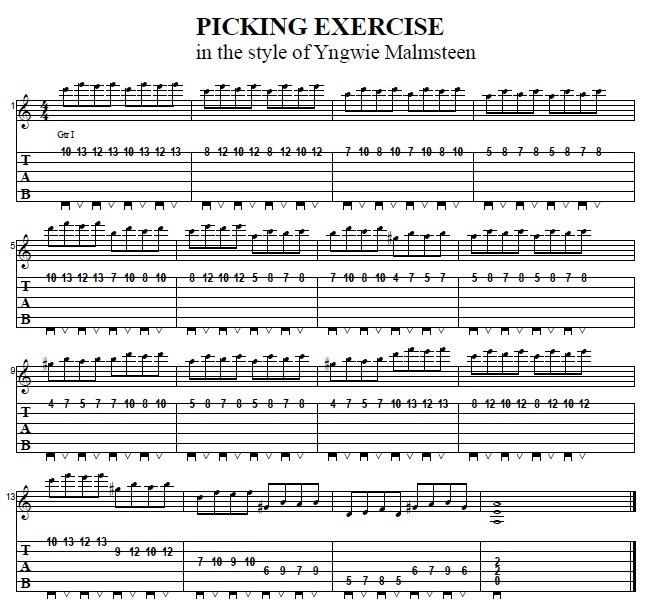
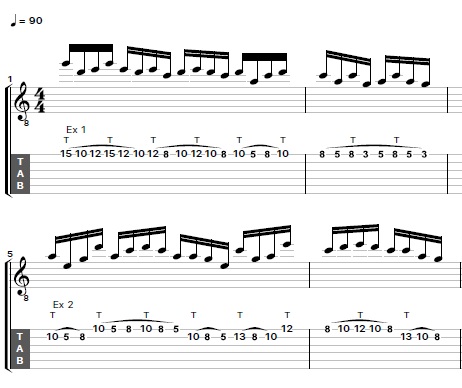
Hey, how’s it going this is Darrin Goodman with Guitar Control, I want to show you a little sequence from Yngwie Malmsteen song “I’ll see the light tonight”.
A little part that he like harmonizes with the keyboards right before the guitar solo and stuff but this is a really good exercise for alternate picking and for working out your fretting hand as well you know moving around through these positions and stuff and he plays this like really fast but you know I’m not even going to attempt to do that it doesn’t really matter you know I mean if you work it up and you play really fast that’s great but it doesn’t have to be played fast to be you beneficial and pretty cool sounding.
[contentwall] [/contentwall]
Click the Tabs button to follow chords and tabs.
Like I said this is all alternate picking so that means no two down strokes in a row no two up strokes in a row just down, up, down, up, down, up. For the first position most of this is on the first string by the way on the 10th fret of the 1st string with your first finger and then the other two notes from the 12th fret with your third finger and the 13th fret with your fourth finger now you could do this you know 1st, 2nd the 3rd or recommend if you’re a beginner you really get used to using your pinky it just really makes a big difference on a lot of stuff you know if I’m playing up really high above the 12th fret a lot of times I won’t use my pinky just because the frets are closer together and you know things can tend to get a little cramped but for you know anything below that it’s the opposite if you’re trying to go you know make these big stretches you know between your first and second and your third finger it’s that can be a little awkward too so I really recommend that you do it this way. We’ve got 10 and then we go to 13 and then 12 and then back to 13 so each one of these things if you think of it it’s three notes so 1, 2, 3, the pattern is 1, 3, 2, 3, so for this first section we’re going to shape and we’re going to play it twice.
Now we just move down into the next position so notes 1 and 2 become notes 2 & 3 so now we’re going to move our fourth finger from the 13th fret to the 12th and now our second finger on the 10th and our first finger on the 8th. Now this is how I like to do it some people like to do this they you know they like to make the stretch there that it’s just not comfortable for me to do that if you have longer fingers then this might be the way to go I’ve just kind of noticed that the players who are blessed with those you know awesome guitar player hands which I am NOT you know players like Paul Gilbert or Ebay or Steve Vai you know they all have you know really long fingers and I’ll notice that they tend to do those shapes that way so remember first shape now our second shape so now we’re going to be 8, 12 and we move down into the next position again so our first finger goes to seven fourth finger goes to ten and second finger is at 8 and then we move down again so now we’re 5, 7, and 8, so this whole first part.
Now for the next section which is like staff number two we go back up to the 1st shape and we only play it once though this time now we’re going to skip the 2nd shape and go to the 3rd one we go down we’re 7, 8, and 10 and then we go back up and get the one that we skipped a 12 and 12 and now again we’re going to skip and go down 5, 7, and 8 back up to 7, 10, and eight.
Now we’re going to come all the way down for 7 and 5 and then back to 5, 7, and 8 and we do that one twice so that whole sequence all right and then for the second half of that we go back to 4, 5, and 7 again and then all the way back up to the 1st shapes of 10, 1, and 13 and then down 1, 2, 8, 10, and 12, twice now we go to the very first one and now it’s now it’s where we change we’re going to move on to other strings so we do it once here 10, 12, and 13, on the 1st string and now we go to the 2nd string 9, 12, 10, to the 3rd string 7, 10, and 9, and now 4th string 6, 7, and 9 now to the 5th string 5, 7, and 8 but we are changing the sequence a little bit now we’re going to go instead of like 1, 3, 2, 3, and then back to the 4th string same frets but we’re also going to do that same thing so we’re going to go and then that last part just like that.
I hope you enjoyed that and you got something out of it if you liked the video give me a thumbs up leave a comment down below if there’s something you’d like to see either myself or one of the other instructors at guitarcontrol.com do in a future lesson so like I said aside from this just being you know kind of a cool sounding riff and stuff it’s a great workout for both of your hands one you’re working with alternate picking and it’s like an endurance thing just to keep going and then with your fretting hand it’s you’re basically getting exercise for all four fingers and you’re having to move through these positions and stuff so it just kind of helps you to like visualize places to go on the on the fret board all right so that’s all I’ve got for you today.
Make sure to subscribe on our You Tube Channel and we’ll see you in our next video lessons, thanks for watching.
[ninja-popup ID=715]
